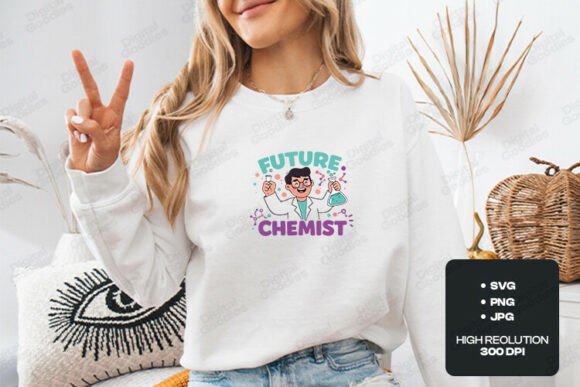
Future Chemist Cute Science Design
A Cheerful Spark—Not Just Another Lab Motif
First glance at the Future Chemist Cute Science Design lands like a warm, thoughtful smile—not flashy, not loud, but quietly confident. It’s got that rare balance: playful enough for a toddler’s onesie, polished enough for a boutique science camp t-shirt, and sincere enough to hang on a teacher’s apron without irony. I recently sketched it onto a linen-cotton tea towel mockup for a local maker fair booth—and immediately noticed how the character’s posture and flask tilt invite the eye to linger, not rush past. That matters. In embroidery, where stitch count and clarity are finite, charm has to earn its place.
Where This Design Truly Shines (and Why)
The Future Chemist Cute Science Design is built for real-world wear, not just screen appeal. Its clean silhouette, moderate detail level, and intentional negative space make it exceptionally forgiving across common embroidery applications: sweatshirt embroidery, tote bag design, baby embroidery, and embroidered patch production all benefit from its balanced proportions.
- Custom apparel: Works beautifully on crewneck tees and relaxed-fit sweatshirts—no crowding around seams or shoulders.
- Personalized gifts: A natural fit for back-to-school totes, lab-themed birthday pillows, or nursery decor. Parents and educators respond to its warmth, not just its theme.
- Craft business & Etsy seller use: Stands out in digital embroidery file listings because it avoids overused tropes (no beakers exploding, no cartoon atoms). It feels intentional—not algorithm-chased.
- Holiday embroidery: Surprisingly effective for STEM-themed Christmas stockings or graduation caps—its uplift is subtle, not saccharine.
Watch These Real-World Embroidery Moments
This isn’t a “set-and-forget” machine embroidery design. Its personality emerges only when you respect its physical limits. On a textured fabric like terry cloth or heavy canvas, fine details in the flask rims or facial expression can blur unless stitch density is adjusted. And on stretchy fabric—think ribbed knit baby onesies—skip the satin stitch for outlines unless you’ve tested stabilization thoroughly.
Dark fabric? Yes—but only with high-contrast thread colors. I ran a test on navy fleece using bright teal and buttercup yellow thread: the flasks popped, the face stayed legible, and the overall tone remained joyful, not muffled. On thin fabric like lightweight cotton poplin? Add medium tear-away stabilizer *beneath* and light cut-away *on top*—especially if stitching near seams or curved edges like cap fronts.
Curved surfaces (caps, curved pillow covers) demand attention to hoop size and digitizing flow. The Future Chemist Cute Science Design doesn’t sprawl, so it adapts well—but don’t force it into a 3-inch hoop if your original file suggests 4–4.5 inches. Crowding distorts proportion and dulls impact.
What It Adds to Your Finished Product—Beyond Aesthetics
When stitched cleanly, this design elevates perceived value. Not because it’s complex, but because it *feels considered*. Customers notice that. A handmade product with the Future Chemist Cute Science Design reads as curated—not mass-produced—even when sold alongside generic science clipart. That builds trust, especially for Etsy sellers and small shop owners positioning themselves as thoughtful makers, not just resellers.
It also supports brand consistency. If your craft business centers on education, curiosity, or gentle learning themes, this design reinforces that message without needing text. No slogans required. Its visual language—rounded shapes, open posture, clear gaze—communicates approachability. That translates directly to buyer engagement: people pause, smile, ask questions. I saw it happen twice at last month’s craft fair, both times leading to upsells on matching embroidered lab notebooks.
Practical Embroidery Designer Notes You’ll Actually Use
Before stitching your first Future Chemist Cute Science Design, do these five things:
- Test on scrap fabric—same weight and weave as your final project. Watch how the flasks fill and whether the face’s eyes hold shape.
- Check thread color contrast in natural light. What looks vibrant on screen may mute on oatmeal linen or heather grey.
- Review stitch density. Overly dense fills flatten texture; too sparse loses definition. Adjust based on fabric, not just default settings.
- Confirm hoop size compatibility before loading. If your machine struggles with tight corners, consider simplifying outer contours slightly—this design tolerates minor refinement well.
- Verify licensing. Since this is marketed as a Graphics / T-Shirt Designs asset, confirm whether commercial embroidery rights (e.g., selling finished embroidered patches or custom apparel) are included—or if separate permission is needed.
A Design That Grows With Your Projects
I’ve used the Future Chemist Cute Science Design across three very different contexts this season: a set of embroidered kitchen towels for a science museum gift shop, personalized baby caps for a pediatric clinic fundraiser, and a limited-run series of embroidered patches for a girls-in-STEM nonprofit. Each time, it held up—not as decoration, but as quiet storytelling.
That’s the sign of a strong embroidery file: it doesn’t shout. It connects. It invites curiosity instead of demanding attention. Whether you’re an embroidery designer refining your portfolio, a small business owner sourcing reliable design assets, or a hobbyist stitching heartfelt gifts—the Future Chemist Cute Science Design earns its place not by being clever, but by being kind, clear, and consistently usable.
Just remember: even the friendliest chemist needs proper stabilizer, thoughtful thread selection, and a moment of testing before going live. Respect the craft—and the design will respect your work back.